A leash walking safety routine gives everyday outings a calmer, more deliberate rhythm. It replaces rushed departures with small choices that help dogs feel supported. Many difficult walks begin before the front door even opens. Excitement builds quickly when a dog expects immediate movement and stimulation. A steady start creates a clearer transition from home to the outside world. You do not need complicated drills to make this shift feel meaningful. Instead, focus on predictable preparation, consistent signals, and a pace your dog can understand. The goal is not a flawless walk through every distraction. It is a safer experience that becomes easier to repeat. That practical mindset makes progress feel possible on ordinary weekdays.
Every walk works better when you decide what it should accomplish first. Some days, the purpose may be a quiet bathroom break near home. Other days, you may want a longer route with gentle opportunities to practice. A clear purpose prevents you from expecting too much at once. It also helps you choose the right time, location, and walking length. Think about your dog’s energy, recent activity, and comfort with the neighborhood. Use a leash training plan to keep those choices organized without making them rigid. Small adjustments are easier when you know what success looks like. A calm departure can be enough on one day. A relaxed pass by a familiar corner may feel like a real win on another. Consistency grows when goals match the moment.
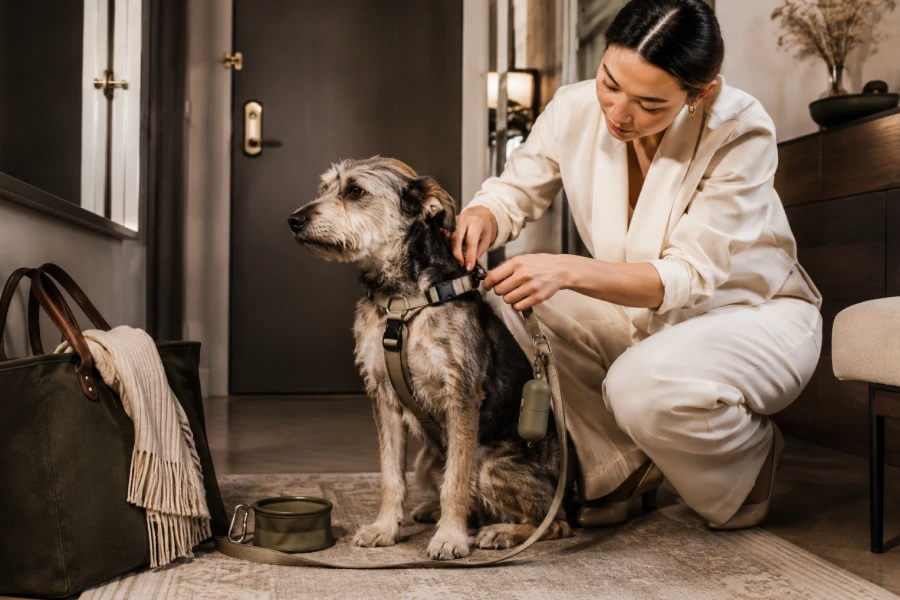
The first few minutes at home often shape the rest of the outing. Put the leash on without turning preparation into a burst of excitement. Pause briefly before opening the door, especially when your dog pulls forward. That pause teaches that movement follows calm, not frantic pressure. Keep your own body language relaxed and avoid repeated commands. Dogs notice rushing hands, tense shoulders, and abrupt changes in direction. A calm walking routine begins with your pace, not only your dog’s behavior. Choose simple words and use them consistently during preparation. Leave extra time when possible, because hurried starts often invite frustration. The most useful routine is one you can follow even on busy mornings.
Sidewalks provide constant information if you slow down enough to notice it. Watch for a lowered head, frozen posture, hard staring, or sudden changes in breathing. These moments can signal uncertainty long before a dog barks or pulls. Give your dog space to process the environment rather than forcing a quick pass. Cross the street, step into a quiet driveway, or create distance when needed. That choice supports outdoor dog safety while preserving your dog’s trust in you. Stay aware of traffic, loose dogs, bikes, and unfamiliar noises. Your route does not need to become an obstacle course. It simply needs enough room for thoughtful decisions. Over time, reading these early signals makes walks feel less reactive.
Equipment should make handling clearer and more comfortable for both of you. Check the leash, collar, harness, and attachment points before heading outside. Worn clips or poor fit can create unnecessary stress during a simple walk. Select gear that lets you guide without harsh pulling or constant readjustment. Keep treats, waste bags, and basic essentials easy to reach. A prepared pocket or pouch prevents you from searching when attention matters. Supportive tools make loose leash practice feel more natural during real outings. Avoid changing every piece of equipment at once. Give your dog time to become familiar with one helpful adjustment. Comfort and predictability usually matter more than complicated accessories.
Distractions are not failures; they are simply part of outdoor life. Another dog, a delivery truck, a squirrel, or a loud gate can change the mood instantly. Prepare for those moments by giving yourself permission to move away. Distance often creates more learning than standing still through discomfort. Use a gentle turn, a wider path, or a brief pause behind a visual barrier. Keep your cues brief so they remain useful when your dog feels excited. Reward attention when it appears, even if it lasts only a second. Avoid expecting your dog to ignore every interesting sight immediately. Calm progress usually comes in small repetitions. Each manageable moment builds confidence for the next one.
The strongest routines are flexible enough for weather, schedules, and changing energy levels. You may have a peaceful walk one day and a shortened route the next. That does not erase progress. Instead, it proves that the routine can adapt without disappearing. Review what helped your dog settle and what created extra pressure. Keep one or two reliable habits when everything else changes. These might include a calm exit, a familiar route, or a pause before crossing. The Leash Walking and Outdoor Safety Guide offers a useful structure for noticing patterns and refining them. Make notes after challenging walks if that helps you remember details. A few observations can reveal which choices support calmer outings. Repetition turns those observations into confidence.
Safer walks do not require perfect sidewalks, empty parks, or a dog who never reacts. They begin with realistic expectations and patient adjustments. Let every outing teach you something about your dog’s comfort and communication. Notice which routes feel easier at certain times of day. Pay attention to changes in behavior after rest, meals, or busy household moments. Build from the situations where your dog can succeed. Add challenge slowly rather than trying to fix everything in one week. The value of a simple system is that it remains useful as life changes. With repetition, walking becomes less about managing problems and more about sharing time outside. That is the kind of progress worth protecting.




Leave a comment