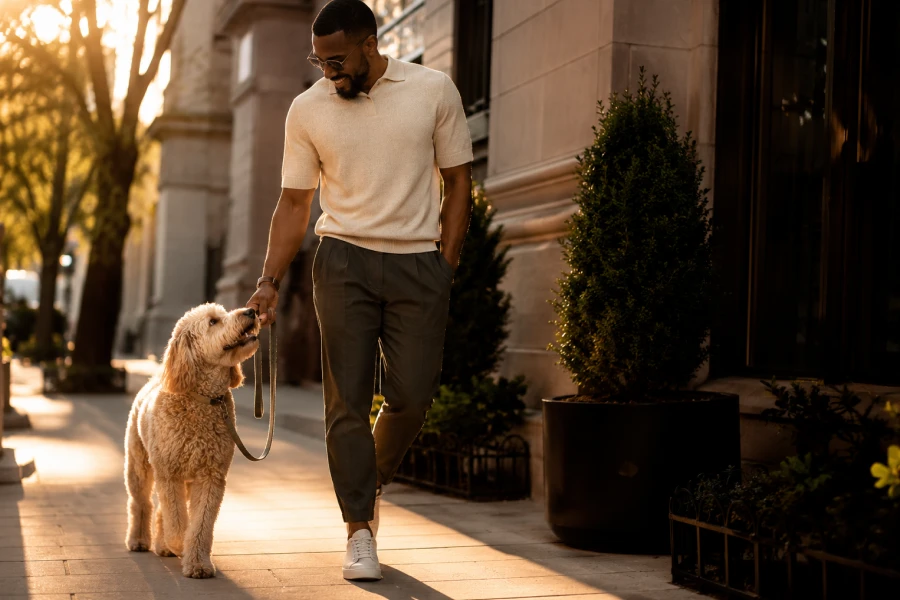
Dog leash manners outdoors are not about making every walk look perfectly polished. They are about helping your dog move through everyday spaces with more clarity. A busy sidewalk can feel overwhelming when smells, people, sounds, and motion arrive together. Your dog needs time to understand what you are asking in those moments. Clear habits turn that confusion into something more manageable. The best approach combines patience, preparation, and realistic expectations. You can build better manners without turning every outing into a formal lesson. Small choices during normal walks often teach the most. Focus on communication that feels steady instead of demanding. The result is a dog who can look to you more easily when the environment becomes busy.
Connection does not mean asking for constant eye contact from your dog. It means becoming predictable enough that your dog notices your direction. Start with short moments of attention near home or in a quiet area. Reward a glance, a softened body, or a choice to follow your pace. Those small responses matter because they create a shared rhythm. A dog walking cues system works best when words stay simple and familiar. Use one cue for moving forward and another for pausing. Avoid adding new language every time a distraction appears. When your signals remain consistent, your dog has less guessing to do. That clarity can make the outside world feel less chaotic.
Dogs gather information through scent, sound, movement, and body language. They cannot always process a busy setting at the speed humans prefer. Allow brief, structured sniffing when it is safe and appropriate. Sniffing can help a dog settle into a new area. At the same time, keep the walk moving when fixation starts to build. The goal is balance, not control over every second. Notice when your dog becomes more focused on one trigger than the wider environment. A gentle change of direction can break that pattern early. Quiet routes offer useful practice before you attempt crowded spaces. The more comfortable your dog feels, the easier it becomes to guide the next choice.
Space is one of the most useful tools available during a difficult walk. You do not need to pass closely by every person, dog, or noisy object. Crossing the street can be a smart decision, not a setback. Step behind a parked car or widen your path when another dog approaches. Those choices support distraction management for dogs without creating a dramatic scene. Your dog learns that you notice pressure and respond before it grows. That feeling of support can reduce the urge to pull or bark. Practice distance in low-stress situations so it becomes familiar. Over time, you may discover that your dog recovers more quickly after surprises. Space creates room for better decisions from both of you.
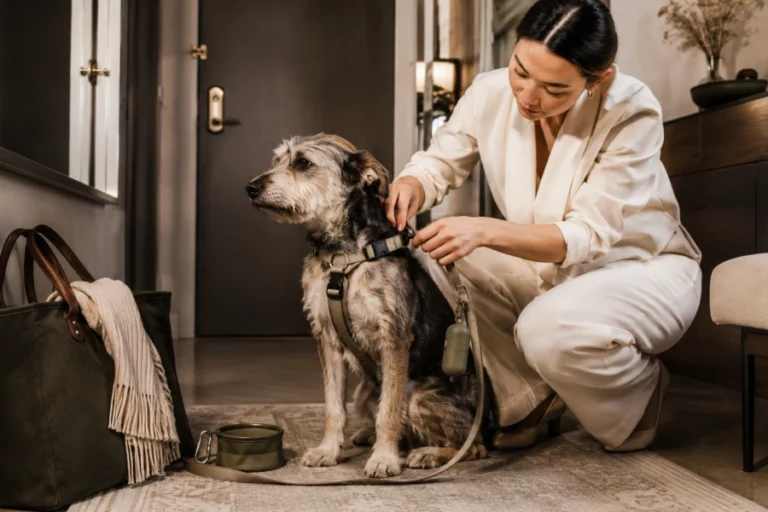
Good leash manners depend partly on how comfortably you can respond. Choose a leash length that gives your dog room without removing your control. Keep your grip secure but relaxed, especially when walking near traffic. Avoid wrapping the leash tightly around your hand or wrist. That habit can make sudden movement harder to manage. Consider how your shoes, bag, and usual route affect your balance. Practical preparation supports safe walking equipment choices that fit your routine. Carry only what you need, so your hands remain available. Make sure you can reach rewards without stopping every few steps. When handling feels simpler, your timing improves naturally.
Some dogs become loud, bouncy, frozen, or overly focused when excitement rises. These reactions do not mean your dog is trying to be difficult. They usually mean the situation feels bigger than their current skills. Respond by creating distance and lowering the pressure. Keep your voice calm rather than repeating commands more loudly. A brief retreat can prevent one hard moment from becoming an entire difficult walk. Use reactive dog walk support as a way to plan for recovery, not punishment. Look for the first sign that your dog can reconnect with you. Then reward that shift and continue only when it feels appropriate. Slow improvement is still meaningful improvement.
Repetition builds trust when it follows a pattern your dog can understand. Use similar exits, walking cues, and recovery choices across several outings. Keep sessions short when your dog seems tired or overstimulated. A shorter successful walk is usually more helpful than a long difficult one. Track progress by looking at recovery time, not just perfect behavior. Notice whether your dog settles sooner after a trigger passes. Celebrate calmer turns, easier check-ins, and moments of loose leash movement. The Leash Walking and Outdoor Safety Guide can help you organize those observations into useful next steps. Build one layer at a time instead of changing everything together. Consistency will eventually become part of the walk itself.
You do not need a special training destination to improve outdoor manners. The mailbox, a quiet corner, or the path beside your building can become practice spaces. Choose moments when your dog is able to learn rather than already overwhelmed. Keep your response predictable when the environment changes. Give yourself permission to turn around when the route feels too difficult. Protecting your dog’s comfort is part of responsible handling. With time, those everyday decisions create a dog who understands your movement more easily. Your walks may not become silent or effortless overnight. They can become more cooperative, more readable, and more enjoyable. That is a practical goal for any dog owner.



Leave a comment